Morocco Currency: Dirham, Cash, Cards and Tipping
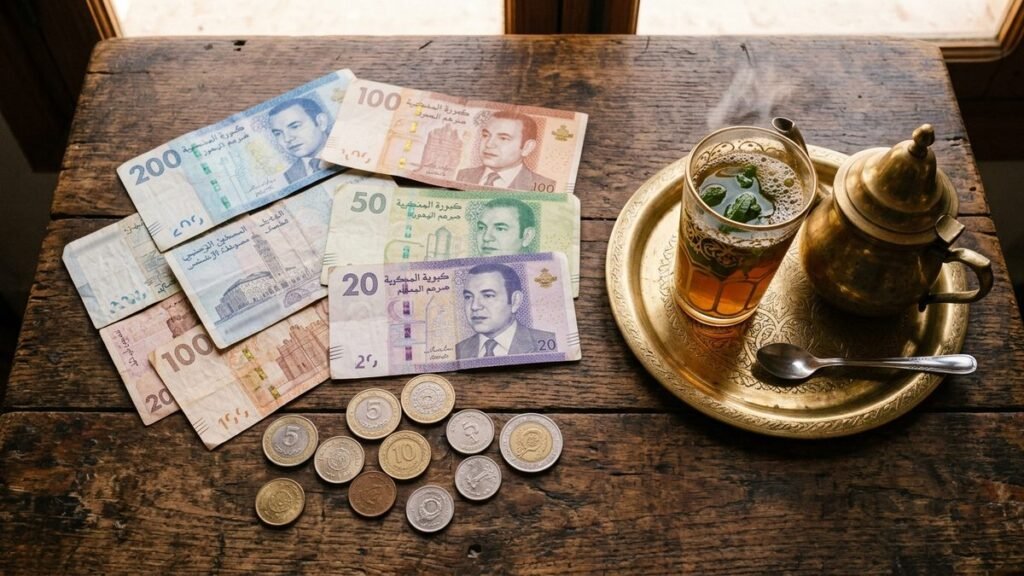
The Moroccan dirham is a closed currency, and the main practical questions are where cards work and how much cash to carry. This guide uses the central bank’s published rates and flags the rules that come from press reports. For budgets see the Morocco travel cost guide.
Sources checked 2026-10-23: Bank Al-Maghrib’s published reference rates (bkam.ma, dated 22 October 2026). The rules on bringing dirhams and foreign cash in and out come from the US State Department’s Morocco page (checked 2026-10-23). Moroccan press reports give different thresholds, so check with customs before you rely on a figure.
The dirham at a glance
| Currency | Moroccan dirham, MAD (written dh or dhs) |
|---|---|
| Reference rate, 22 Oct 2026 | 1 EUR = 10.9953 MAD, 1 USD = 9.7985 MAD, 1 GBP = 13.121 MAD |
| Banknotes | 20, 50, 100 and 200 dirhams |
| Coins | 1, 2, 5 and 10 dirhams, plus small santim coins |
Rates move daily, so check bkam.ma or your bank for the current figure. Bank and exchange office rates differ from the reference rate.
Taking money in and out
The dirham is a closed currency, so you get it in Morocco, not at home. The US State Department’s Morocco page gives these rules: foreign currency worth 15,000 MAD (about 1,500 USD) or more must be declared on arrival, cash above 50,000 MAD must be documented to be exported legally later, and exporting Moroccan dirhams is prohibited, so exchange what is left before you fly out (exchange desks exist at most major airports). Moroccan press reports have quoted other thresholds, including 100,000 MAD for declarations and 2,000 MAD of dirhams you may carry, so the figures are not consistent across sources. Confirm with Moroccan customs before you travel. Keep your exchange receipts, since you may be asked for them.
Cash or card
Plan on cash for small spending and cards for bigger bills:
| Where | What to expect |
|---|---|
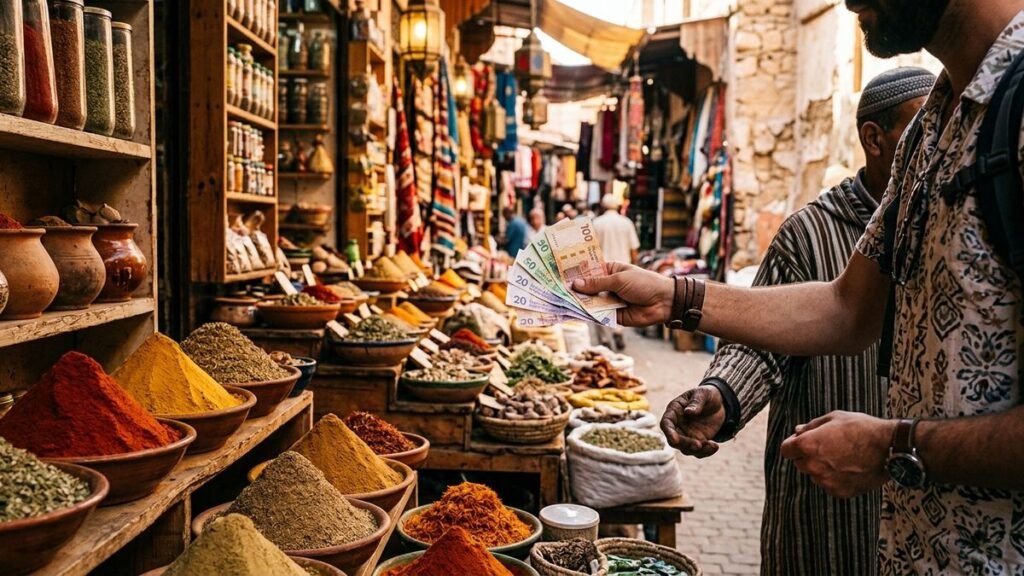
| Souks, small shops, street food, cafes | cash |
| Petit taxis and grand taxis | cash |
| Mid-range restaurants, hotels, many riads | card often accepted, ask first |
| Supermarkets and large shops | card |
| Trains | card online, cash or card at the station |
Some riads prefer cash, so ask when you book. Keep small notes: a 200 dirham note for a short taxi ride is a problem.
ATMs and exchange
ATMs are common in cities and at airports, and they are usually the easiest way to get dirhams. If the machine offers to convert the amount into your home currency, choose dirhams, since its own rate is usually worse. Your bank and the Moroccan bank may each charge a fee, so withdraw larger amounts less often. Exchange offices are an option for euros or pounds. Keep the receipt, and do not change money with someone on the street.
Tipping
Tips are small and expected in some places. These are rough norms, not rules:
- Cafes: a few dirhams or round up.
- Sit-down restaurants: around 10 percent unless service is included.
- Porters and riad staff: 10 to 20 dirhams for carrying bags.
- Public hammam attendants: 20 to 50 dirhams. See the hammam guide.
- Guides and drivers: at the end of the day if you were happy.
A pocket of coins and 20 dirham notes makes this easier.
Bargaining
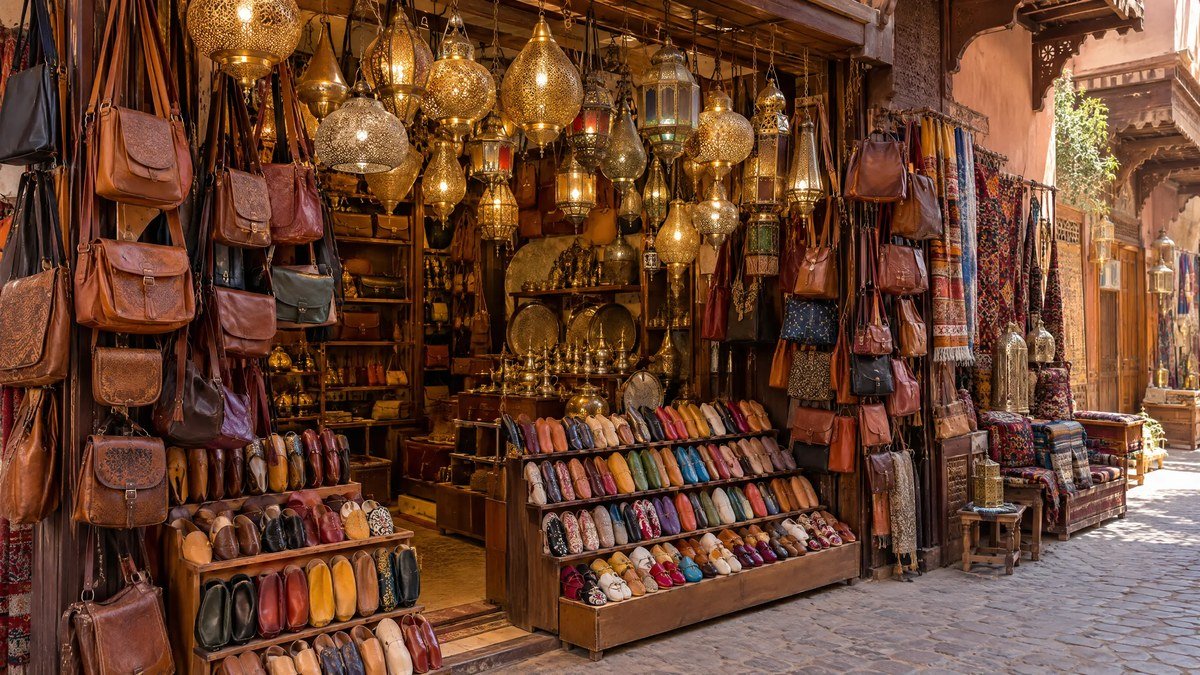
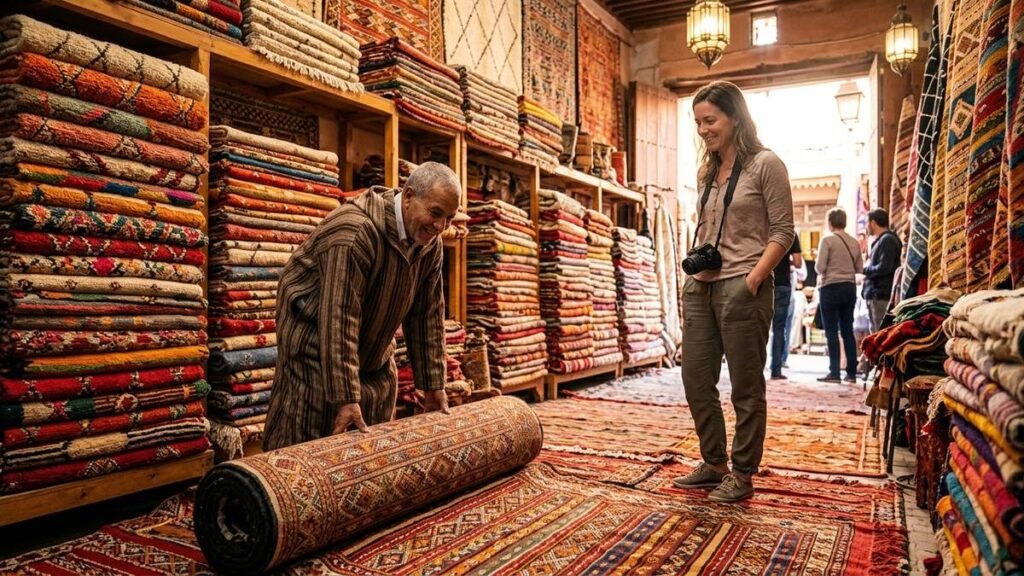
In souks, prices are rarely fixed. Decide what an item is worth to you before you ask. Do not make an offer if you do not want it, since agreeing a price means you are expected to buy. If you cannot agree, thank the seller and walk away. Shops with price tags, supermarkets and pharmacies are fixed price. The Marrakech travel guide covers the souks.
Converting dirhams
At the Bank Al-Maghrib reference rates of 22 October 2026 (1 EUR = 10.9953 MAD, 1 USD = 9.7985 MAD, 1 GBP = 13.121 MAD), these amounts work out as follows. Exchange offices and cards will give a slightly different rate.
| Dirhams | EUR | USD | GBP |
|---|---|---|---|
| 20 MAD | 1.82 | 2.04 | 1.52 |
| 50 MAD | 4.55 | 5.10 | 3.81 |
| 100 MAD | 9.09 | 10.21 | 7.62 |
| 200 MAD | 18.19 | 20.41 | 15.24 |
| 500 MAD | 45.47 | 51.03 | 38.11 |
| 1000 MAD | 90.95 | 102.06 | 76.21 |
The prices we found while updating our other guides, converted at the same rate:
- Casablanca to Marrakech train, 2nd class (lowest fare seen): 120 MAD, about 10.9 EUR
- Marrakech to Fes train, 2nd class: 260 MAD, about 23.6 EUR
- Marrakech to Essaouira coach (Supratours, lowest fare seen): 100 MAD, about 9.1 EUR
- Hassan II Mosque guided visit, foreign adult: 140 MAD, about 12.7 EUR
- Bahia Palace, foreign adult (Ministry of Culture portal): 100 MAD, about 9.1 EUR
- Jardin Majorelle only, foreign adult: 170 MAD, about 15.5 EUR
The sources are in the guides for each trip, and prices change, so treat these as examples from October 2026.
Frequently asked questions
What is the exchange rate for the Moroccan dirham?
On 22 October 2026, Bank Al-Maghrib’s reference rate was 10.9953 MAD per EUR, 9.7985 per USD and 13.121 per GBP.
Can I buy dirhams before I travel?
The dirham is a closed currency, so most travelers get it in Morocco, by ATM or exchange office.
Are cards accepted in Morocco?
In larger shops, hotels and many restaurants, but cash is needed in souks, taxis and small cafes.
Can I take dirhams out of Morocco?
The US State Department says exporting dirhams is prohibited, so exchange them before you leave. Foreign currency of 15,000 MAD or more must be declared on arrival.
Sources
- Supratours (coach timetables and fares)
- Hassan II Mosque Foundation
- Jardin Majorelle official tickets
- Ministry of Culture ticket portal
- US State Department Morocco travel advisory
- Bank Al-Maghrib (exchange rates)
Last checked: 24 October 2026. Operators update fares and times often. Check their site for the current price before booking.