Maroc Telecom vs Orange vs Inwi: Which SIM for Morocco
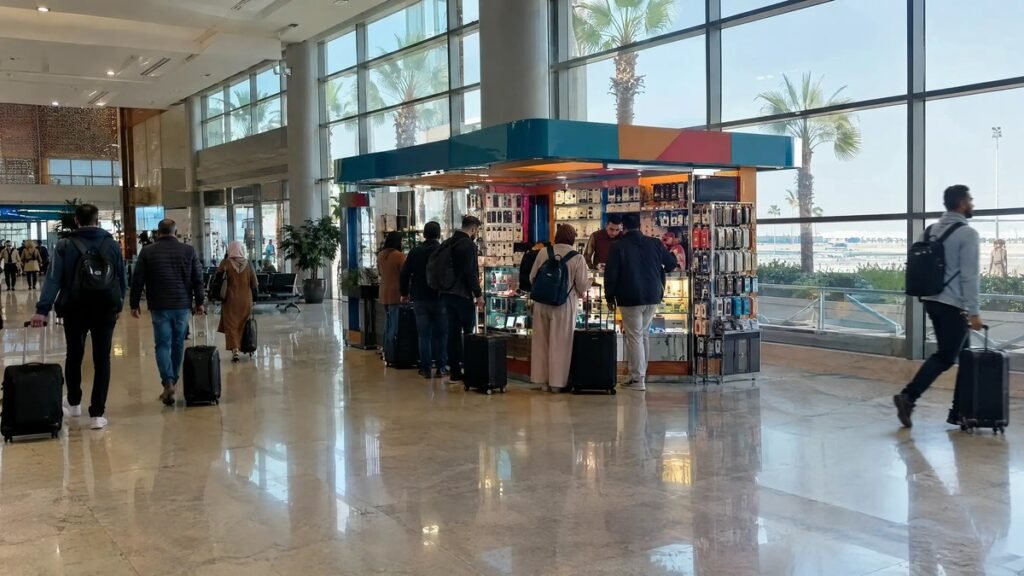
Maroc Telecom vs Orange vs Inwi is the first question most visitors ask when they land, because all three sell prepaid tourist SIMs at the airport and the packs look similar on the counter. The short version from the sources we read is that Maroc Telecom is usually recommended outside the cities, Orange for city speed, and Inwi when price matters most. This guide covers where to buy, reported prices in MAD and EUR, what you need to show, and when an eSIM is the easier choice. For the money side of the trip, see Morocco currency and money.
Maroc Telecom vs Orange vs Inwi: the short comparison
All three are Moroccan mobile operators with prepaid SIMs aimed at visitors. The comparison below is a summary of what the guides we read say, not our own signal tests.
| Operator | Usually recommended for | Reported downside |
|---|---|---|
| Maroc Telecom | Wide coverage, trips outside the main cities | Often the pricier option |
| Orange | Faster speeds and 5G in cities, often good value | Reported weaker signal in the Atlas and the south |
| Inwi | Lowest prices and promotions | Reported weakest reach in rural areas |
Sources disagree on speed. One page citing an OpenSignal report gives average 4G download speeds of about 28.7 Mbps for Maroc Telecom, 31.4 for Orange and 26.8 for Inwi, while an eSIM seller says Maroc Telecom is fastest. We could not open the report, so do not choose on speed alone. Every guide agrees on one point: coverage drops in the desert and the high mountains for all three networks.
Where to buy a SIM and what you need
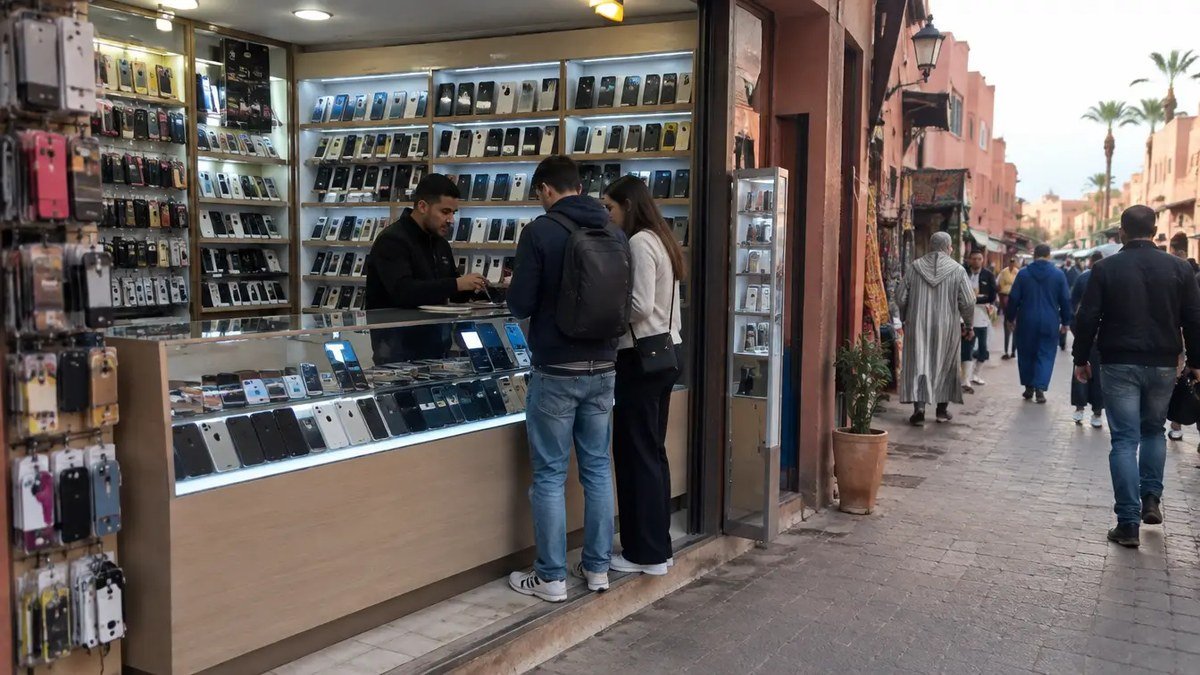
Guides say Casablanca and Marrakech airports have SIM shops or kiosks in the arrivals area after baggage claim, for Maroc Telecom, Orange and Inwi. One guide says Maroc Telecom and Orange are regularly staffed at Marrakech while Inwi is less consistent. You can also buy in operator shops in town or in supermarkets, which can be cheaper than the airport.
- Bring your passport. Several guides say every SIM has to be registered to an identified person and that shops photograph your passport. We found no official operator or regulator page confirming the exact rule, so check with the shop.
- Bring an unlocked phone. A locked phone may not accept a Moroccan SIM.
- Allow time. One guide estimates 45 minutes to 2 hours for buying and activating a SIM, registration included. We would plan for the lower end at a quiet counter and more in a queue.
The downside is the airport queue after a long flight. If your phone supports it, an eSIM bought before you fly avoids the counter, see the eSIM section below. For the ride into town afterwards, see Marrakech airport to the medina or Casablanca airport to the city.
SIM card prices in Morocco
Reported prices vary a lot, and most come from blogs and SIM sellers, so treat them as a range. We saw these figures:
- A Maroc Telecom tourist SIM listed at 10 GB of data and 30 minutes of local calls for 30 days, about 100 MAD (roughly 9 EUR), from one seller guide.
- A bigger Maroc Telecom pack of roughly 30 GB for about 200 MAD (roughly 18 EUR), valid about 30 days, from another guide.
- Orange packs of about 20 GB for 100 MAD and 40 GB for 200 MAD, from one site. A 2026 guide gives 20 GB at 100 to 150 MAD and 40 GB or more at 200 to 300 MAD.
- Airport kiosks reported from 50 to 200 MAD depending on the package, and up to about 1,000 MAD at Casablanca airport for a bigger bundle.
That wide range is the main takeaway. Ask for the price, the data amount and the validity before you hand over your passport, and ask whether the price includes the SIM itself and the first top-up. Compare the shop price with the roaming rate from your home plan: one magazine piece says roaming can cost 100 MAD or more per gigabyte.
Which network holds up outside the cities?
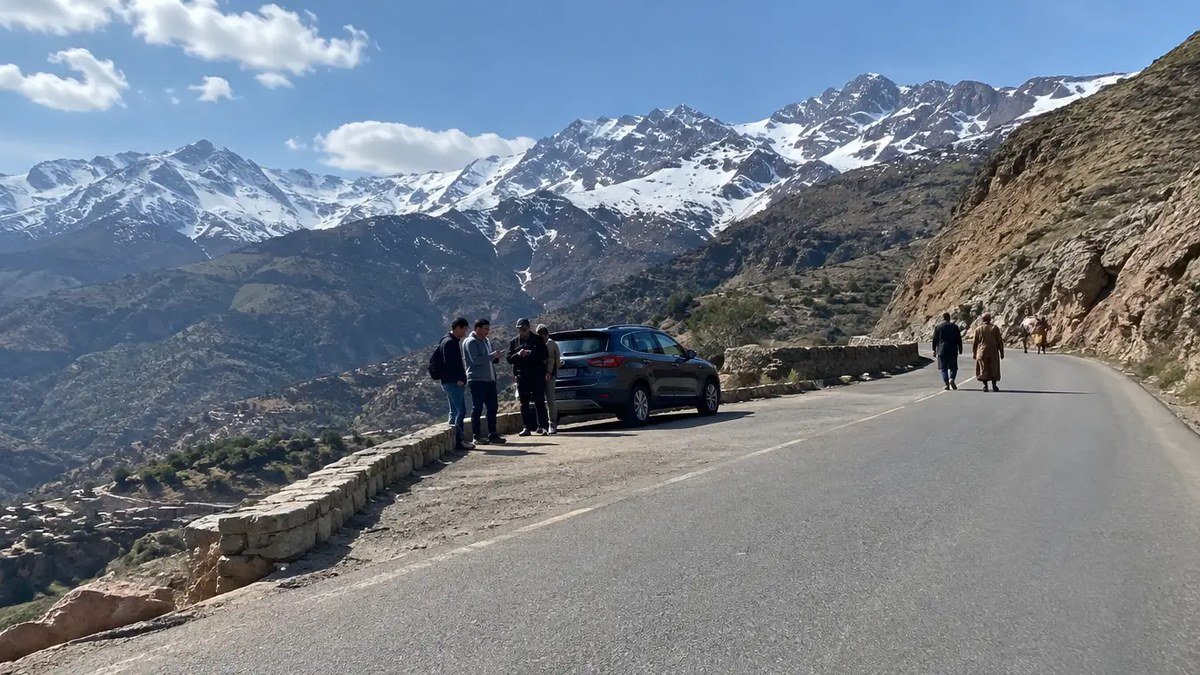
If your trip includes the High Atlas, the Sahara or the coast away from the big towns, the guides lean towards Maroc Telecom. One describes it as the signal that holds outside the main tourist cities, and another reports its signal was the one that held in the Sahara and the Atlas. Orange is reported to drop in the Atlas and the south, and Inwi to have the weakest rural reach.
- Marrakech, Casablanca, Rabat, Fes and Tangier: all three should work. One article reports 5G in Casablanca, Rabat, Tangier and Marrakech.
- Toubkal and desert camps: expect no signal on any network. One guide says the Toubkal refuge has no coverage at all.
- Long drives: download maps for offline use before you leave, see the Morocco road trip guide and Getting around Morocco.
The limit of this section is that we did not test the networks ourselves. If you are travelling for weeks across several regions, ask the shop about coverage on your route before you pick.

eSIM or local SIM?
An eSIM is a SIM you install on your phone with a QR code, so there is no counter and no card to swap. A Morocco World News piece from April 2026 says eSIMs are activated remotely, avoid passport registration at a kiosk and start from as little as 3 USD, naming BazTel as one provider. The article is about travel eSIMs, and the ‘no registration’ point comes from the eSIM side, so check the terms of the plan you buy.
Sources disagree on whether the Moroccan operators themselves sell eSIMs to visitors: one airport guide says none do, while others say Maroc Telecom supports eSIM on compatible phones. Ask at the counter if you want a local eSIM.
- Choose an eSIM if your phone supports it, you want data the moment you land, and a short stay is enough.
- Choose a local SIM if you stay longer, want a big data pack for the money, or want a Moroccan number for calls and local services.
- Do not remove your home SIM without a safe place for it. A small case or a spare pocket works.
For a first trip, many readers will find the eSIM simplest, and a local SIM cheaper for longer stays. For more on what else to sort before you fly, see Morocco travel tips and Morocco travel insurance.
Our pick by trip type
- City break (Marrakech, Casablanca, Fes): Orange or Inwi if you want to save, or an eSIM for convenience.
- Road trip, Atlas or Sahara: Maroc Telecom, as most guides suggest, plus offline maps.
- One month or more, remote work: a local SIM from a town shop, after comparing monthly packs. See Remote work in Morocco.
- A few days only: an eSIM or the smallest local pack.
Whatever you choose, keep your phone number handy for hotels and drivers, since many riads and tour guides use WhatsApp.
Frequently asked questions
Which SIM card should tourists get in Morocco?
Maroc Telecom is the most often recommended for coverage outside cities, Orange for city speed and 5G, and Inwi for price. The sources disagree on details, so match the choice to your route.
Do I need my passport to buy a SIM in Morocco?
Several guides say yes, because SIMs are registered to an identified person and shops photograph the passport. We found no official page confirming it, so ask the shop.
How much does a tourist SIM cost?
Reported prices range from about 50 to 200 MAD at airport kiosks and from about 100 to 300 MAD for 20 to 40 GB packs, with some bigger airport bundles reported near 1,000 MAD. Ask for the full price first.
Can I buy a SIM at Marrakech airport?
Guides say there are shops after baggage claim for Maroc Telecom, Orange and Inwi, though Inwi may be less consistently staffed.
Is an eSIM better than a local SIM in Morocco?
An eSIM skips the counter and passport step according to one article, while a local SIM is often cheaper for longer stays. It depends on your phone and trip length.
Will my phone work in the Sahara or the Atlas?
Coverage drops in the desert and high mountains on every network, and the Toubkal refuge is reported to have none. Maroc Telecom is reported to hold up better than the others.
Is my phone compatible?
It must be unlocked. Check with your home provider before you travel.
The information in this guide comes from trusted travel sources. Prices and times can change, so confirm them before you pay or travel.