Do You Need Travel Insurance for Morocco? What Good Cover Includes
Travel insurance is not something we found Morocco requiring at the border, but the UK and US governments both advise cover. This guide sticks to what those official pages say, including the emergency numbers. For budgets see the Morocco travel cost guide.
Sources checked 2026-10-23: the UK government’s Morocco travel advice on gov.uk (marked still current on 23 October 2026, last updated 19 August 2026) and the US State Department’s Morocco advisory dated 4 September 2026. We found no official Moroccan page on insurance, so the points below come from those two governments’ advice to their own travelers.
Is it required?
We found no official Moroccan page that makes travel insurance a condition of entry, and the entry checks we read on acces-maroc.ma do not mention it (see the visa guide). The UK government, however, tells its travelers to get appropriate travel insurance that covers the itinerary, the planned activities and the expenses of an emergency. Its health page also stresses cover for local treatment and for medical evacuation.
Health cards
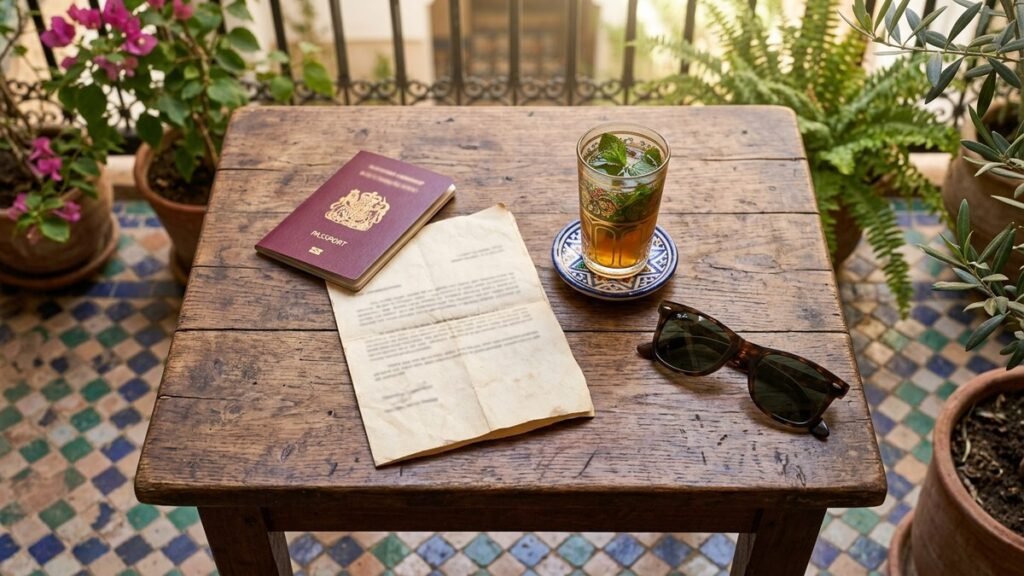
The UK government’s Morocco pages do not mention the GHIC or the EHIC anywhere. Do not assume they apply. If you hold one, treat it as an extra and buy a travel policy for Morocco. Check your own country’s health service for what its card covers abroad.
Emergency numbers
The UK government’s Getting Help page lists:
| Service | Number |
|---|---|
| Ambulance and fire | 150 |
| Police | 190 |
| Gendarmerie (rural areas and highways) | 177 |
Older guides still print 19 for police and 15 for ambulance. The official UK page gives 190 and 150, so save those. Also save your insurer’s 24-hour assistance number somewhere you can read offline, since it is the number you will actually call first.
Medication
The UK government advises bringing enough prescription medication for the whole trip. It notes that travelers have struggled to source medication locally, and that Moroccan pharmacies can only supply alternatives with a new prescription from a Moroccan doctor, because the legal status and regulation of some medicines can be different. It also warns that airport security screens for prohibited items. Carry medicines in their original packaging and check the rules before you fly.
Activities that insurers may exclude
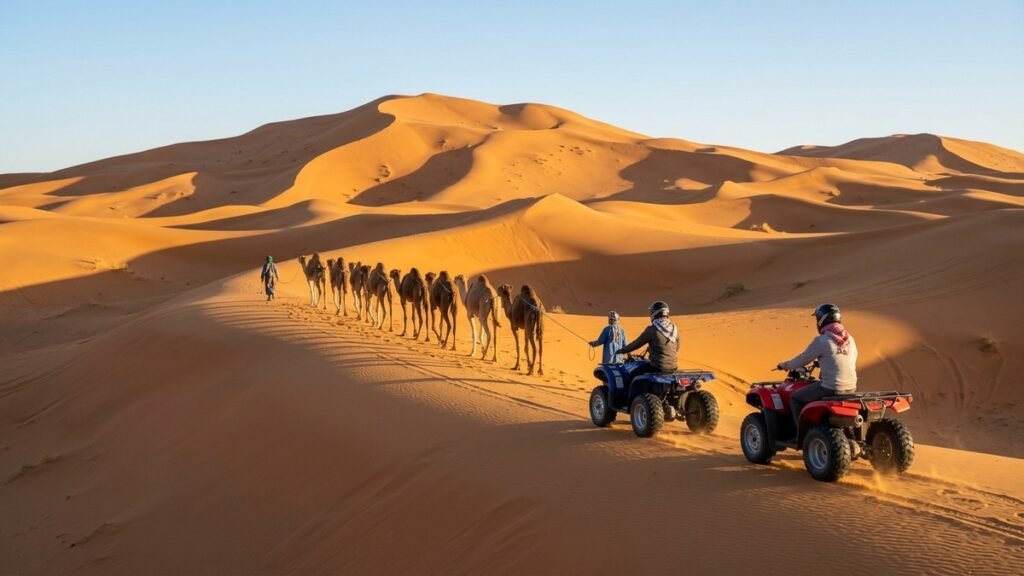
The UK government’s safety page says that some insurance policies will not cover activities such as hiking in the Atlas Mountains, quad biking, hot air balloons and water sports. Those are exactly the activities many visitors book. If your trip includes a desert tour or a balloon flight, read the policy’s activity list before you buy. Our guides to Merzouga and the hot air balloon in Marrakech show what these trips involve.
Health risks the UK government lists
The UK government’s health page for Morocco gives a few practical points that affect what you should look for in a policy.
- Check vaccine recommendations on TravelHealthPro at least 8 weeks before the trip.
- Altitude sickness is a risk in some areas, which matters if you plan to hike in the Atlas.
- Rabies and other animal-borne diseases are present, and stray dogs can be aggressive. If you are bitten or scratched, seek medical advice immediately.
- Henna tattoos can cause painful allergic reactions.
- Practise good food and water hygiene, and seek medical help if vomiting or diarrhoea lasts more than a few days.
- Pharmacies are described as open 24 hours in every city and district, but they may not stock your medication.
- Public facilities offer limited care, while private clinics meet a higher standard, so carry accessible funds for treatment and repatriation.
If you are bitten by an animal, check that your policy covers medical treatment abroad and has an assistance line. Call the insurer’s assistance line from the clinic, as the UK page advises.
What to check in a policy
Based on the government advice above, read the policy for:
- medical treatment abroad and the limit per claim
- medical evacuation and repatriation
- the activities you plan, listed by name
- the dates and countries on your itinerary
- the 24-hour assistance line and how to claim
Keep your policy number, the assistance number and the receipts for any treatment, since insurers usually ask for them.

If you need treatment: a simple order of steps
- Call 150 and ask for an ambulance, the number the UK government gives for medical emergencies.
- Call your insurer’s 24-hour assistance line as soon as you are referred to a clinic or hospital.
- Expect to pay on the spot at many private facilities, since Canada’s advice says doctors and hospitals often expect immediate cash payment, and keep every receipt.
- Keep your policy number, the assistance number and your passport details in your phone and on paper.
This is a checklist built from the government advice quoted in this guide, not medical or legal advice.
What the US and Canadian governments add
The US State Department says it highly recommends buying travel insurance and checking with your provider about evacuation assistance, medical insurance and trip cancellation. Canada’s advice says Casablanca, Marrakech and Rabat have good private medical facilities for non-emergencies, while public facilities are not up to Canadian standards, and that doctors and hospitals often expect immediate cash payment. It advises insurance that covers medical evacuation and hospital stays.
Safety advisory
The US State Department listed Morocco at Level 2, “Exercise increased caution”, on 4 September 2026, citing terrorism risk. The UK page has its own safety section. Read both before you go, and see our safety guide for the wider picture.
Frequently asked questions
Is travel insurance mandatory for Morocco?
We found no official Moroccan page requiring it for entry. The UK government advises getting it, and the US State Department highly recommends it.
Does the GHIC or EHIC cover me in Morocco?
The UK government’s Morocco pages do not mention either card, so do not rely on one.
What are the emergency numbers in Morocco?
Ambulance and fire 150, police 190 and gendarmerie 177, per the UK government.
Does travel insurance cover quad biking or balloon flights?
Not always. The UK government warns that some policies exclude them, so check the activity list.
Can I buy my usual medication in Morocco?
Possibly only with a Moroccan prescription, so the UK government advises bringing enough for the whole trip.
Do I need vaccinations for Morocco?
Check current recommendations on TravelHealthPro at least 8 weeks before you travel, as the UK government advises.
Will I have to pay for treatment up front?
Often, at private facilities. Canada’s advice says doctors and hospitals frequently expect immediate cash payment, so keep receipts for your claim.
Sources checked
Checked on 27 October 2026.
- UK government (gov.uk), Morocco travel advice: safety and security, health, getting help (checked 23 October 2026)
- US State Department, Morocco travel advisory (4 September 2026)
- Government of Canada, travel advice for Morocco (health and medical facilities)
- Morocco e-visa and entry checks (acces-maroc.ma)