What to Wear in Morocco as a Woman: A Practical Guide
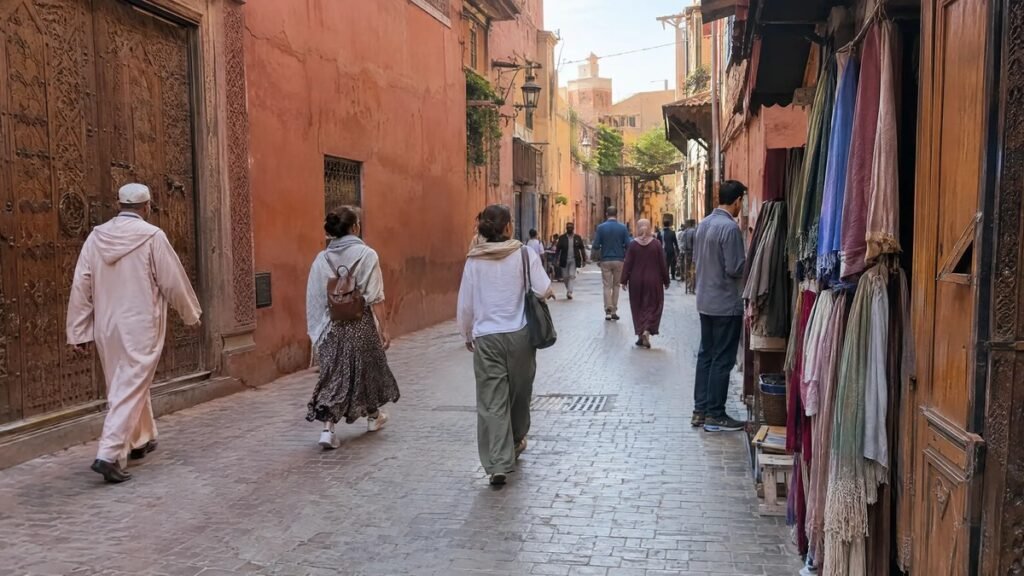
What to wear in Morocco as a woman is the question most first-time visitors ask, and the short answer is this: loose, light clothes that cover your shoulders and knees, plus a scarf in your bag. There is no law that tells a tourist what to wear. It is about respect, comfort and the amount of attention you want on the street. This guide covers daily clothes, the seasons, mosques, beaches, hammams and the desert, with a packing list at the end.
What to wear in Morocco as a woman: the basic rule
Most guides give the same rule of thumb: cover your shoulders and your knees, and avoid tops that show cleavage. The UK government advice says women may get unwanted attention, especially when travelling alone, and suggests loose clothing that covers arms, legs and chest. It also says that clothing that breaks local dress norms can cause offence, especially during Ramadan.
| Usually fine | Better to avoid in towns |
|---|---|
| Long skirts, maxi dresses, wide trousers, jeans | Short skirts and short shorts |
| T-shirts with sleeves, loose shirts, light tunics | Crop tops, tight vest tops, low necklines |
| Linen or cotton in light colors | Sheer or very tight fabrics |
| A scarf over shoulders or hair when needed | Bare shoulders in the medina |
You will see Moroccan women in everything from a djellaba and headscarf to jeans and a fitted jacket, especially in Casablanca and Rabat. Copying the modest end of what locals wear around you is a safe guide. You do not need to wear a headscarf. Several guides state that non-Muslim visitors are not expected to cover their hair, except in a few religious settings.
Cities, medinas and small towns
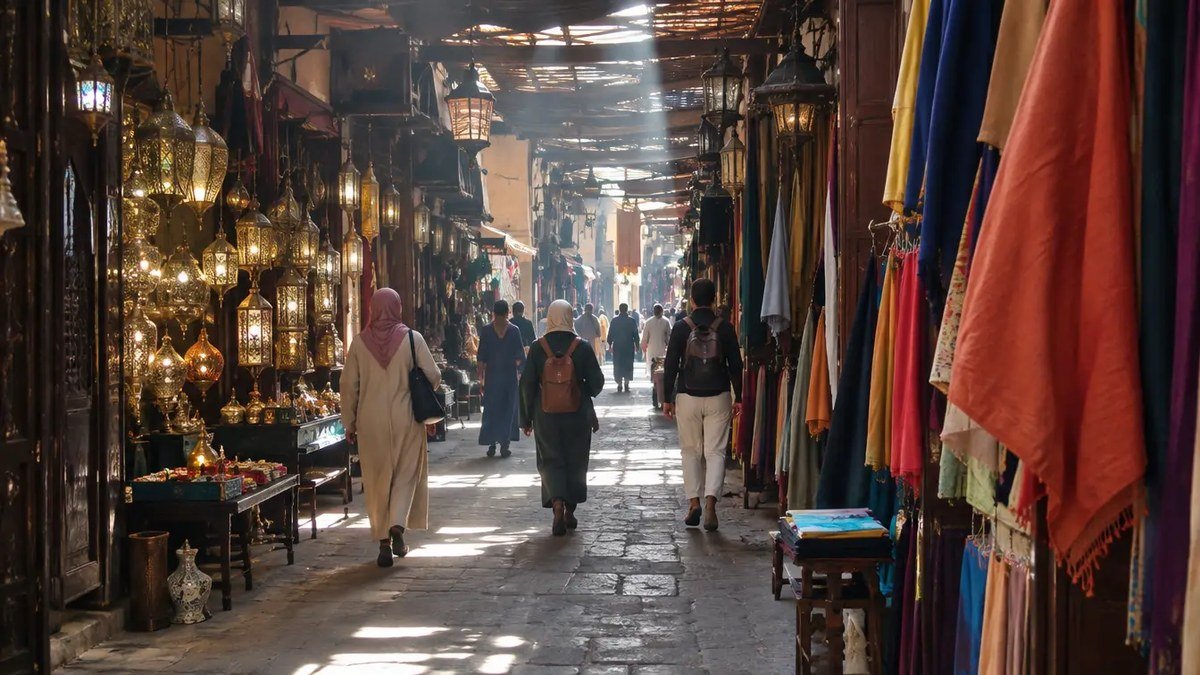
Big cities like Casablanca and Rabat are relaxed, and Moroccan women wear Western clothes there. Marrakech and Fes are touristy, but the old medinas are conservative in practice, with narrow lanes, crowds and many men at work. Villages in the mountains and south are more traditional again. One traveller on a guide page found that Marrakech felt particularly conservative compared with some other cities, which is one opinion, not a rule.
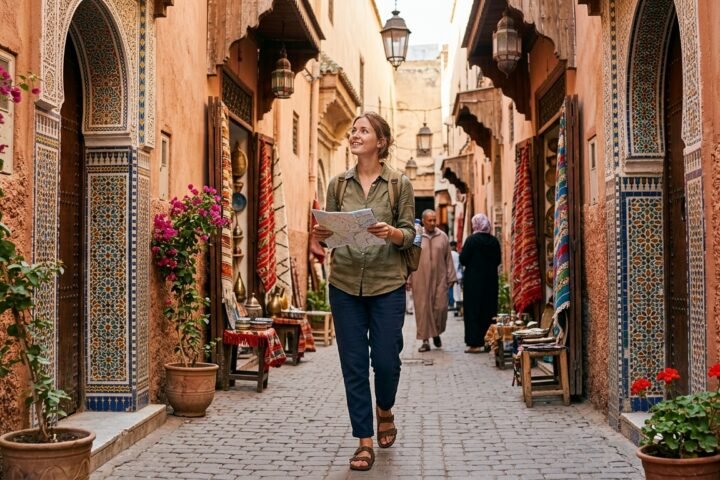
- In the medina: long trousers or a long skirt, a loose top with sleeves, flat comfortable shoes. The lanes are uneven and you walk a lot.
- In a modern cafe or a rooftop terrace: you can relax a little, but the walk there still passes through the street.
- In villages and Berber areas: stay at the covered end of the range, and ask before taking photos of people.
- On long train days: a light layer for air conditioning, and a scarf for dust or sun.
One limit: dressing modestly does not stop all comments. Some guides say harassment happens whatever you wear, and others say a more covered outfit reduces it. Walk with purpose, ignore the guys who call out, and do not feel you owe anyone a reply. For the touts and fake guides the government warns about, see Morocco scams to avoid.
What to pack in summer, winter and the shoulder seasons
Morocco is not a hot country everywhere all year. One guide quotes winter days of roughly 40 to 70 F (about 5 to 20 C) and summer days above 100 F (about 38 C) inland. Nights can be cold, even in the south, and the Atlas has snow in winter.
| Season | What works |
|---|---|
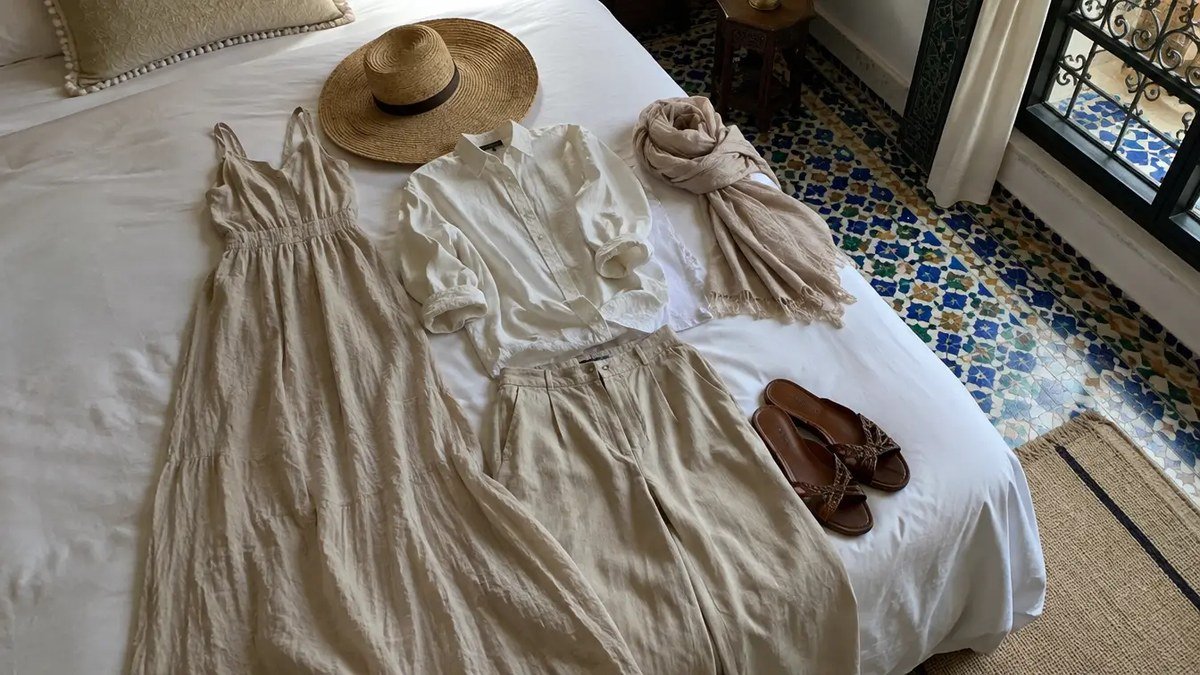
| Summer (June to August) | Loose linen or cotton maxi dress with sleeves or a light shirt on top, wide trousers, a wide-brimmed hat, sandals, a light scarf |
| Spring and autumn | Light trousers, long skirts, a cardigan or denim jacket for evenings, closed shoes for the medina |
| Winter | Jeans, a warm jumper, a proper coat, scarf, boots. Riads can be cold indoors |
| Sahara and mountains | Layers, a windproof jacket, a head scarf against sand and sun, sturdy shoes |
The trick in summer is looseness. A tight sleeveless top is hotter than a loose cotton shirt with sleeves, because the shirt shades your skin and lets air move. Several guides say the same: covering up in thin fabric is cooler than it sounds.
Mosques, hammams and the beach
Most mosques in Morocco are closed to non-Muslims. The big exception is the Hassan II Mosque in Casablanca, which visitors can enter on a guided tour. Guides say you should cover shoulders and knees there, shoes come off inside, and some sources say women should bring a scarf for the hair, while others say it is not required. Tour prices reported are around 130 to 140 MAD (roughly 12 to 13 EUR) and the length is 45 minutes to 1.5 hours, but prices and times change, so check the mosque’s official site or ticket office.
- Hammam: local women usually wear underwear or a swimsuit bottom. Tourist hammams in hotels are more relaxed, and many give you a disposable pair. Ask when you book.
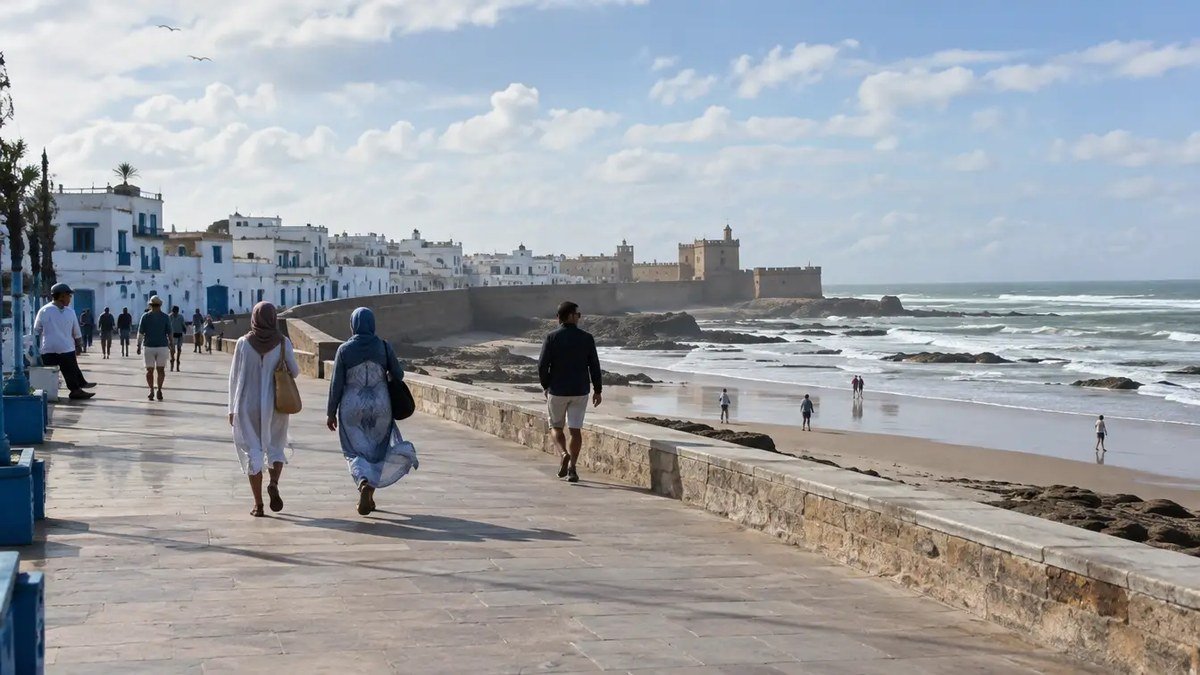
- Beaches in Agadir, Essaouira and Taghazout: swimwear is normal at resort beaches and hotel pools. Many local women swim in clothes, and a cover-up for the walk to and from the beach is a good idea.
- Riad pools and rooftops: swimwear is fine at the pool, but throw something over it to walk through the common areas.
- Hiking in the Atlas: leggings and a long top are common, and a loose shirt over a sports top is easy to carry. See the Toubkal trek guide.
Shoes, scarves, bags and small things
- Shoes: flats or sturdy sandals you can walk in for hours. The medina lanes have uneven stones and puddles after rain. Heels are rare.
- A scarf: carry one every day. It works as a shoulder cover, a sun shield, a dust mask and a cover for a mosque visit. You can buy one in a souk for a few dozen dirhams, so haggle gently, see bargaining in Morocco.
- Bag: a cross-body bag that closes. Showy jewellery and expensive bags attract attention, according to Morocco World News.
- Sun: sunglasses, sunscreen and a hat for the day, then a light layer once the sun drops.
- Photos: ask before photographing people, especially children, as the UK government advises.
During Ramadan, aim for the more covered end of the range, because the UK government says clothing and behaviour that break local norms can cause offence in that month. Other public rules matter as well: public displays of affection are discouraged, and drinking alcohol on the street is illegal. More on the month in Morocco in Ramadan.
A simple packing list
- 2 pairs of light long trousers or one long skirt
- 1 or 2 maxi dresses with sleeves, or a dress plus a light shirt to layer
- 3 or 4 loose tops with sleeves, in cotton or linen
- A cardigan or light jacket, and a warmer layer in winter
- A scarf or two, one big enough for your shoulders
- Comfortable flat shoes plus sandals
- A swimsuit and a cover-up
- Sunglasses, hat and sunscreen
If you travel with children, see Morocco with kids for the family side of packing, and Morocco travel tips for the rest of the trip.
Frequently asked questions
Do I have to cover my hair in Morocco?
No. Non-Muslim visitors are not expected to wear a headscarf in the street. A scarf is useful for a few religious settings, such as the guided visit to the Hassan II Mosque, where sources disagree on whether hair must be covered.
Can I wear shorts in Morocco?
In resort areas and at the pool, yes. In medinas and towns, knee-length or longer is the more comfortable choice. There is no legal ban, but short shorts get more attention.
What should I wear in Marrakech as a woman?
Loose trousers or a long skirt, a top with sleeves and flat shoes for the lanes. Light linen is comfortable in summer.
Can I wear a bikini in Morocco?
At hotel pools and resort beaches, swimwear is normal. Cover up for the walk through public areas.
What should I wear in Morocco in summer?
Loose cotton or linen with sleeves, a wide-brimmed hat and a light scarf. Covering up in thin fabric is often cooler than bare skin in the sun.
What should I wear to the Hassan II Mosque?
Cover shoulders and knees and bring a scarf. Shoes come off inside. Check the official ticket office for current rules and prices.
Does dressing modestly stop harassment?
Not fully. The UK government says women may get unwanted attention, especially when travelling alone, and suggests loose clothing that covers arms, legs and chest, but guides report that it still happens.
The information in this guide comes from trusted travel sources. Prices and times can change, so confirm them before you pay or travel.