Morocco Packing List: What to Pack by Season
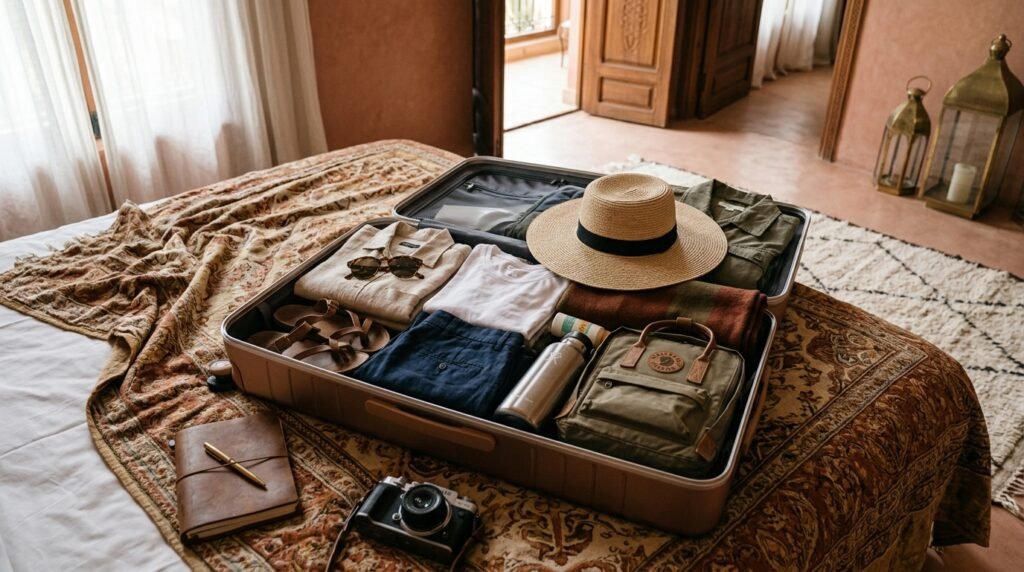
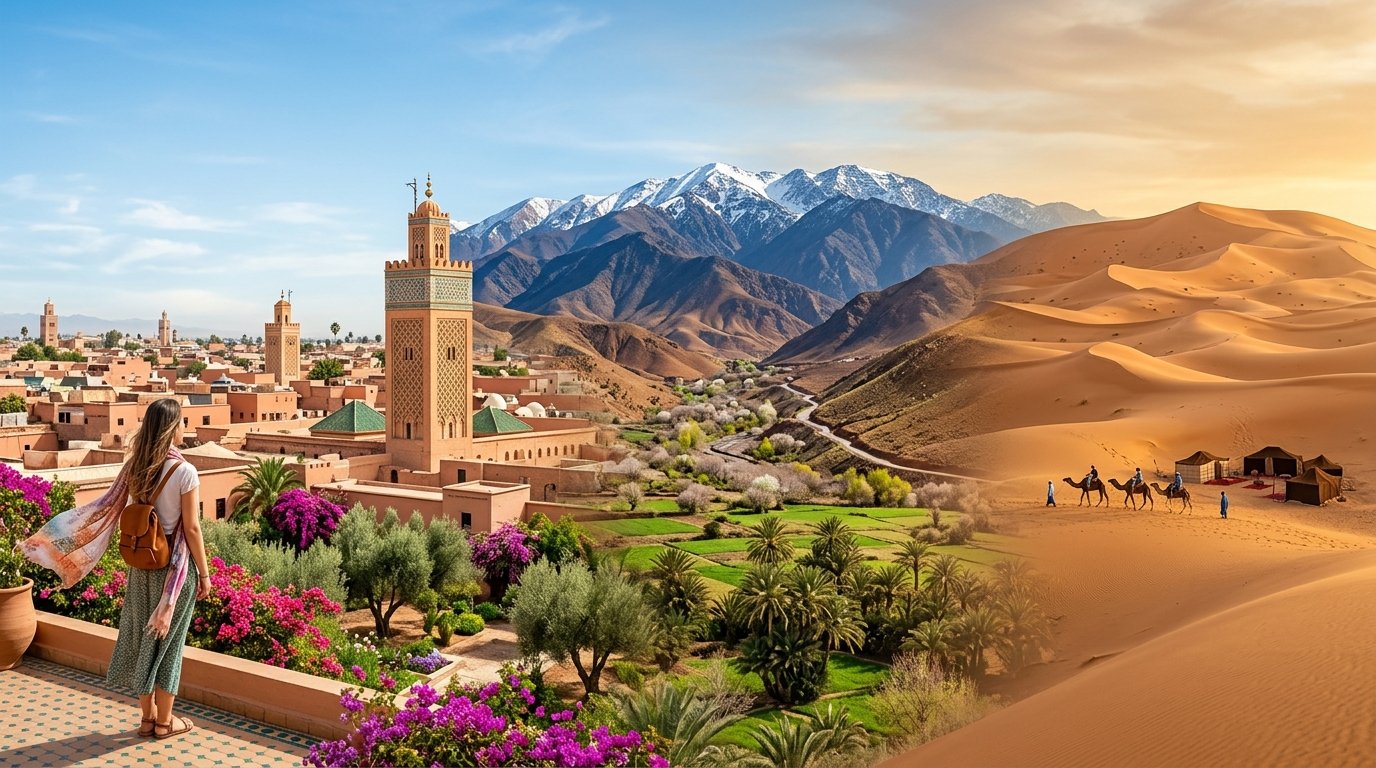
This list is built from travel-guide checklists and tour-operator advice, not from official sources. Check the weather before you pack, see the Morocco weather guide, because Morocco covers coast, cities, mountains and desert.
Think in layers
One guide notes that a single itinerary can swing from 100 F (about 38 C) desert days to 30 F (about -1 C) desert nights. A few more figures from guides:

- Autumn in the Sahara: nights near 7 C against days around 30 C
- Summer: Marrakech and Fes often reach the mid-30s C
- Atlas Mountains: can drop below 4 C at night
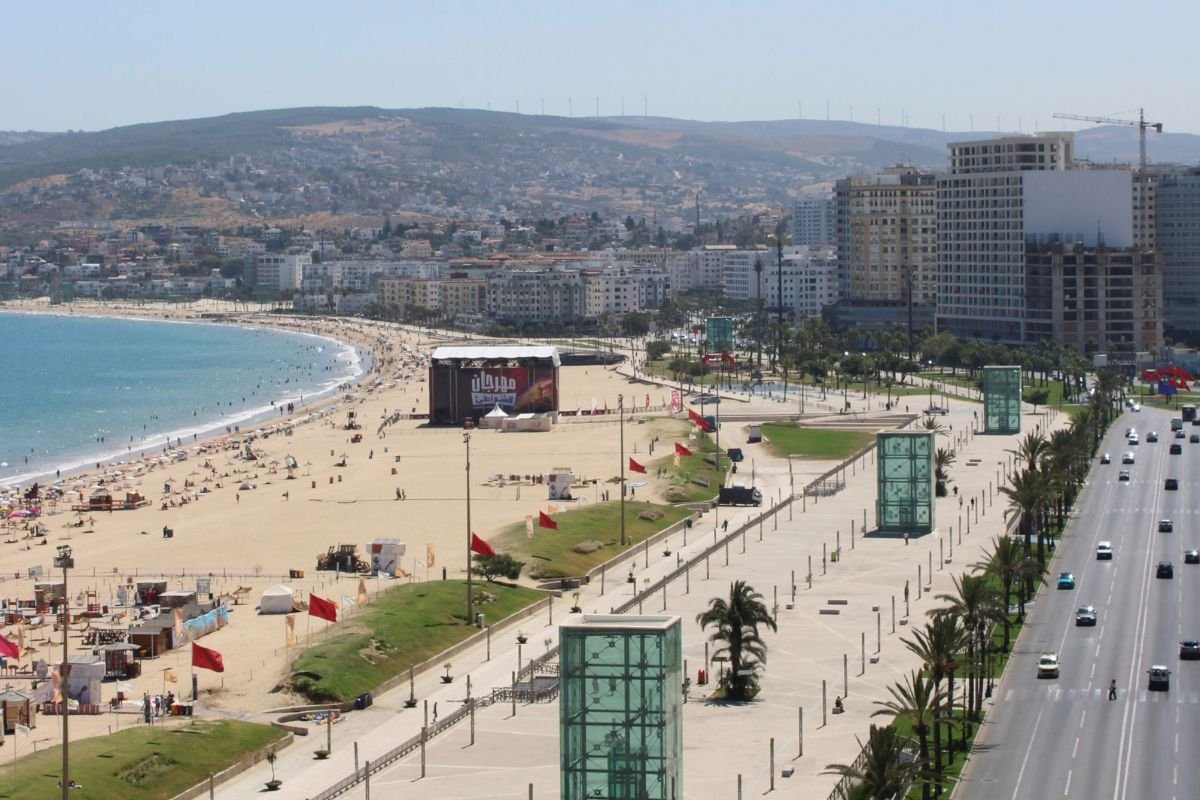
- Coast (Essaouira, Casablanca): cooler and breezier, a light sweater helps
- Winter: desert nights near freezing, damp chilly evenings on the coast
Pack thin layers you can add or remove, a fleece or thermal for the desert and mountains, and a wind layer for the coast.
What the official climate tables say
The WMO tables (1991 to 2020 averages from Morocco’s national met service) back up the layers advice. In Marrakech the average daily range is 5.9 to 19.1 C in January and 20.6 to 37.7 C in July. Fes is 3.7 to 16.0 C in January, with 60 mm of rain over 8 days, and 17.9 to 35.1 C in July. Errachidia, the nearest table to Merzouga, shows 2.0 to 15.9 C in January and 25.8 to 39.5 C in July, and Merzouga itself is probably a little more extreme. So a January trip needs a warm layer in every one of those places, and a rain layer in Fes. There is no official table for Essaouira or Chefchaouen.
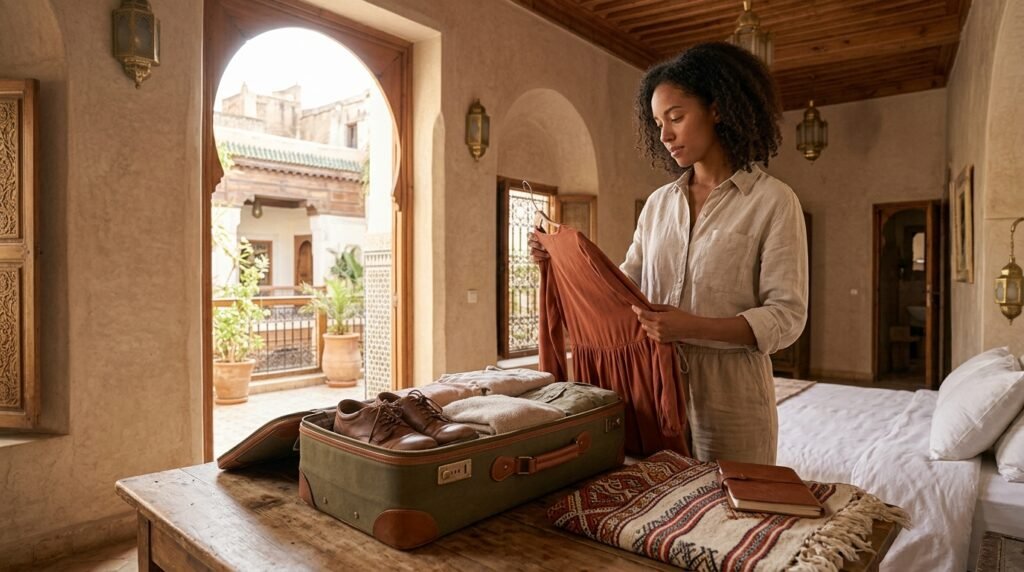
What the temperature range means for your bag
| Place and month (WMO average) | Daily range | Pack |
|---|---|---|
| Marrakech, January | 5.9 to 19.1 C | A warm layer for the evenings |
| Marrakech, July | 20.6 to 37.7 C | Light breathable clothes, hat, sunscreen |
| Fes, January | 3.7 to 16.0 C, 60 mm of rain over 8 days | Warm layer and a rain layer |
| Fes, July | 17.9 to 35.1 C | Light clothes, sun protection |
| Errachidia, January | 2.0 to 15.9 C | Fleece or thermal for desert nights |
| Errachidia, July | 25.8 to 39.5 C | Hot days and warm nights, plenty of water |
Errachidia is the nearest official table to Merzouga, which is probably a little more extreme. These are 1991 to 2020 averages, so a single week can differ.
Clothes for the medina and mosques
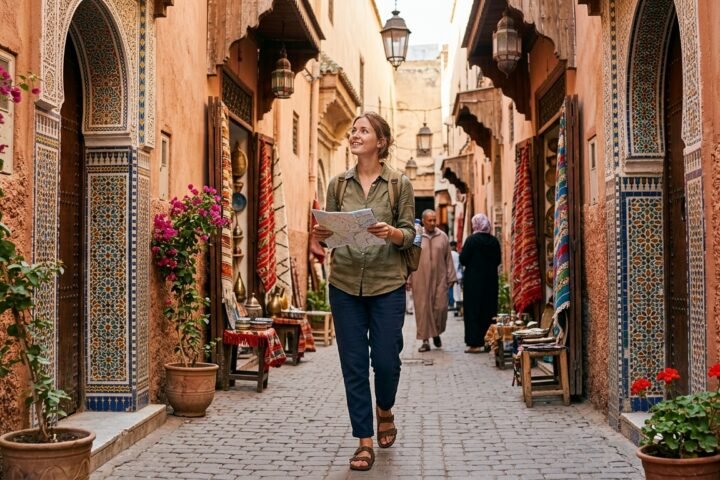
Cover shoulders and knees in the medina and near mosques. Bare arms will not usually bring trouble, but visitors report more stares in smaller towns. Carry a scarf, you may be asked to cover your head in religious sites, and it works against sun and dust. Choose light, breathable fabrics in summer.
Shoes
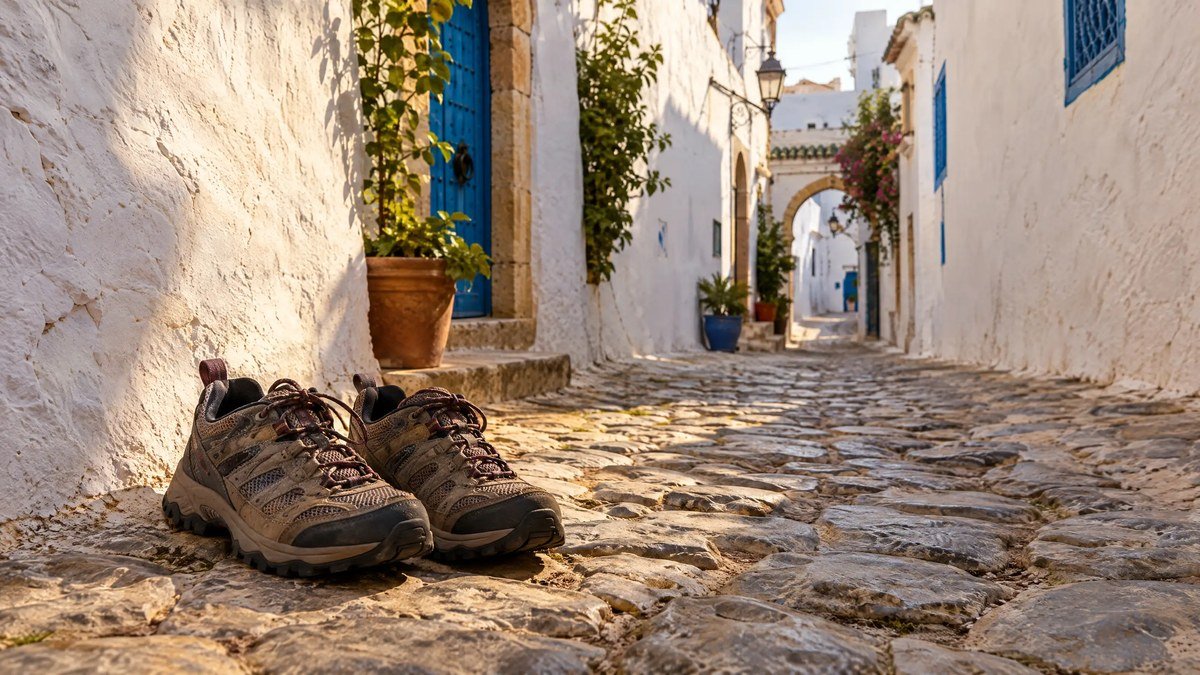
Comfortable shoes with grip. Medina lanes are uneven, and the Setti Fatma rocks and desert paths are loose. Sandals do not grip dune paths. The downside: thin sandals are the usual mistake, so bring closed shoes for at least one day.
Electrics
Morocco uses 220V at 50Hz with Type C and Type E sockets. Most phone and laptop chargers are dual voltage and only need an adapter. Older 110V hair dryers need a converter. A power bank helps on long travel days.
Money and documents
- Cash in small dirham bills for souks, taxis and tips
- Passport valid at least 3 months after arrival (see the visa guide)
- Copies of your passport and insurance (see the insurance guide)
- A card for larger purchases, but expect cash only in many places
Health and small things
- Personal medication and a basic first-aid kit
- Sunscreen, sunglasses and a hat
- Hand sanitiser and tissues, public toilets may lack paper
- Insurance that covers medical care and lost luggage
- eSIM or local SIM: sources only mention eSIMs in general, so check coverage and prices separately
What to leave at home
Drones and surveillance equipment are prohibited and will be confiscated on entry, per official Canadian advice. Do not post your passport, and bring your own medication, because hospitals often want immediate cash payment and pharmacies may not stock your brand. Passport validity is asked at 3 months after arrival by the UK page and 6 months beyond departure by the Canadian page, so check yours.
What you can skip
Heavy jewellery and valuables, an umbrella in summer, and anything you would hate to see dusty in the desert. You can buy most toiletries in cities.
By trip type
| Trip | Add |
|---|---|
| Cities only | Light clothes, walking shoes, scarf |
| Desert night | Fleece, warm socks, scarf for dust |
| Atlas hikes | Grip shoes, fleece, rain layer |
| Coast | Windproof layer, swimwear |
Weather check by month
Temperatures change a lot between cities and the desert in the same week. Before you fix your list, open the Morocco weather guide for the month and cities you plan to visit, then match: cold nights in the desert and Atlas, hot days in Marrakech and Fes in summer, and mild damp evenings on the coast.
Packing for the bag you will carry
Medina streets are uneven and riads are often reached on foot from the taxi drop-off, so a soft bag or a small wheeled suitcase works better than a heavy one. Keep your documents, medication and a day’s change of clothes in your hand luggage, in case a bag arrives late. Leave space for souvenirs.
A short checklist
- Passport, insurance copy and cards
- Cash in small dirham bills
- Adapter (Type C or E) and power bank
- Scarf and a fleece
- Closed shoes with grip
- Sun protection and personal medication
Frequently asked questions
What should I pack for Morocco?
Thin layers, closed shoes with grip, a scarf, a plug adapter and a small amount of cash in small notes. The right mix depends on the month and the region.
Do I need warm clothes?
Yes in winter almost everywhere (January lows of 2.0 to 5.9 C in Marrakech, Fes and Errachidia) and on desert and mountain nights in any season.
What plug does Morocco use?
Types C and E, 220V at 50Hz. Most phone and laptop chargers are dual voltage and only need an adapter.
What should I wear in the medina?
Cover shoulders and knees, and carry a scarf for mosques and for sun and dust.
What documents do I need?
A passport valid at least 3 months after arrival (sources differ, see the visa guide) and copies of your insurance.
What can I skip?
Heavy gear for a city trip, and anything you cannot carry up stairs, since many riads have steps.
Sources checked
Checked on 27 October 2026.
- WMO World Weather Information Service (Marrakech, Fes and Errachidia, 1991 to 2020)
- Travel-guide and tour-operator checklists (not official sources)
- Government of Canada and gov.uk travel advice for passport rules