Sahara Camel Trek in Morocco: What to Expect on the Dunes
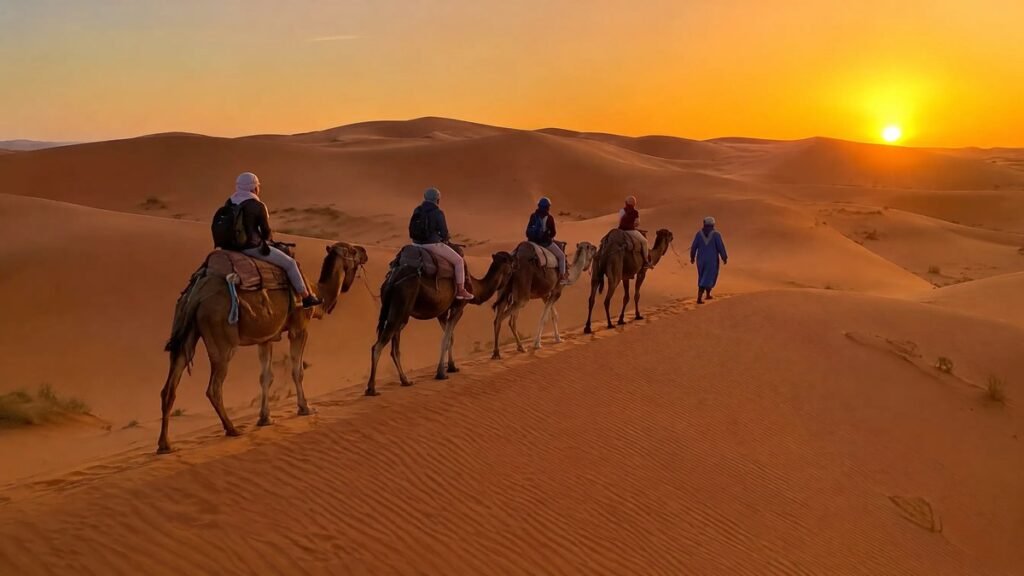
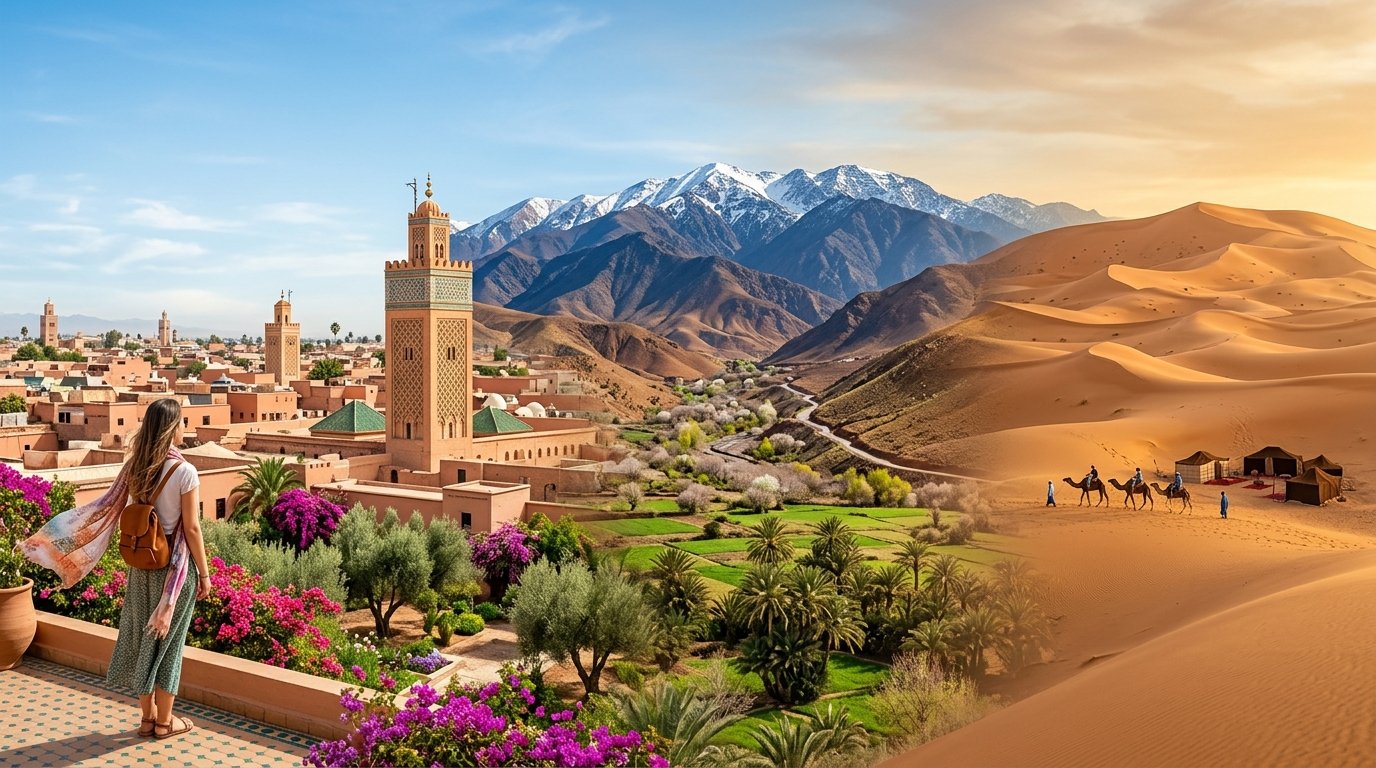
A Sahara camel trek in Morocco usually means a slow ride into the dunes of Erg Chebbi near Merzouga in the late afternoon, a night in a desert camp, and a ride back at sunrise. It is simple, a bit awkward and often the highlight of a Merzouga trip. This guide covers how long the ride is, what it feels like, what to wear, what it costs and what to ask before you pay. For the place itself, see the Merzouga travel guide, and for the bigger choice of where to go, read Merzouga vs Erg Chigaga.
A Sahara camel trek at a glance
Most trips are sold as one night. You leave a hotel or guesthouse in or near Merzouga a couple of hours before sunset, ride a line of camels across the dunes to a camp, eat dinner, sleep in a tent and ride back in the morning. Some people do a shorter sunset ride and return the same evening, and some tours add a second night.
| Question | Short answer |
|---|---|
| Where | Mostly Erg Chebbi near Merzouga, or Erg Chigaga near M’Hamid for a longer trip |
| Animal | A dromedary (one hump), led in a line by a guide on foot |
| Time on the camel | Listings mention roughly one to two hours each way, so ask |
| Typical trip | One night, dinner and breakfast included |
| Price in listings | About 47 to 140 USD per adult (roughly 430 to 1,300 MAD, 40 to 120 EUR), check current price |
| Suits | Anyone who can sit still on a moving animal for a while |
The ride itself is not fast and not far. What people remember is the quiet, the colour of the sand at the end of the day and the slightly ridiculous feeling of being carried up a dune by an animal that clearly has opinions.
What the ride feels like
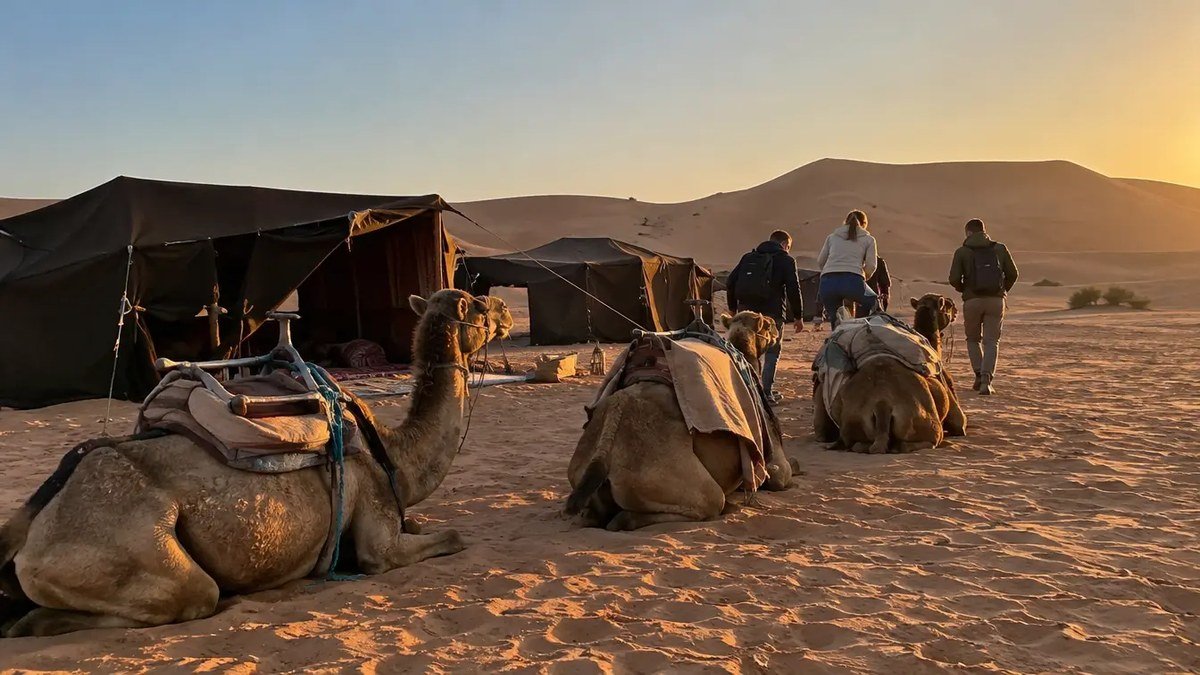
Camels kneel to let you on. Then they stand up back legs first, which tips you forward, and then front legs, which tips you back. Guides and travel writers give the same advice: hold the front of the saddle when the animal rises, because most first-timers wobble. After that it is a slow, swaying walk.
The saddle has handles to grip, and some operators use extra padding on traditional Berber saddles. Going downhill on a dune needs a bit of balance, since you lean back. Your guide walks at the front and usually links the camels in a line, so you do not steer anything.
Expect the first twenty minutes to feel strange and the next hour to feel pleasant. Expect your inner thighs to notice it the next morning. Fair warning: it is comfortable enough, but not for long periods if you have back or hip problems.
Sunset ride, overnight camp or longer trek
| Option | What you get | Good to know |
|---|---|---|
| Sunset ride only | A short loop in the dunes, back before dark | Cheapest, but you skip the night sky and the sunrise |
| One night in a camp | Camel ride in, dinner, tent, breakfast, ride out | The standard trip, most listings are this |
| Two nights or longer | More time in the dunes, sometimes a night further out | Slower pace, more camp choice, higher price |
| Camel plus quad | Bundles that add a quad bike or sandboarding | Louder, and not everyone wants the engines |
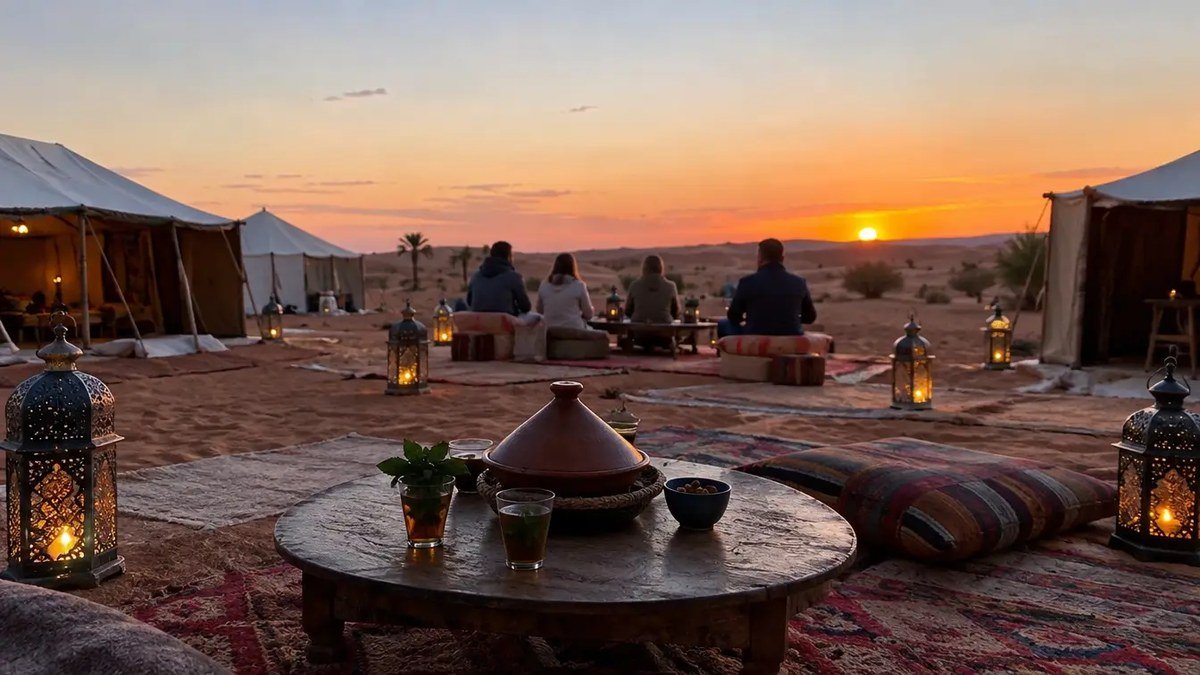
Overnight listings often include dinner (a tagine is common) and breakfast, and sometimes a sunrise ride and sandboarding. Drinks, tips and lunch are usually extra. Camps range from simple tents with shared facilities to private tents with a bathroom, so check which one you are getting before you pay.
If you want to compare how different trips are built, the Sahara desert tour guide covers the questions to ask an operator.
What to wear and bring
Wear trousers, not a skirt or dress, and something loose enough to open your legs wide on the saddle. Closed shoes are easier than sandals once you are walking in sand. A scarf or light head cover helps with sun and wind, and sunglasses are worth packing.
- A warm layer: the desert is hot in the day and much cooler after dark, especially in winter.
- A small daypack with water, sunscreen and a phone charger. Large bags usually stay at the hotel or travel separately, so ask.
- A head torch or phone light for walking around the camp at night.
- Cash in small notes for tips and drinks. Do not count on card payment in the dunes.
Dust and sand get everywhere. Keep your camera and phone in a zip bag when the wind picks up, and clean the lens before you take sunset photos.
Cost and what to ask before you pay
Booking-site listings for overnight trips from Merzouga showed prices from about 47 USD up to about 140 USD per adult at the time of checking, depending on the camp and extras. At rough exchange rates that is around 430 to 1,300 MAD, or 40 to 120 EUR. The cheap end is usually a simple camp, and the top end often adds a private tent or extra activities. Prices change by season, so check current price.
- How long is the camel ride each way, and does it start at the hotel or at a meeting point?
- Is dinner, breakfast and water included, and are tips extra?
- What is the tent like: shared or private, with or without a bathroom?
- Is the sunrise ride and the return transfer included?
- How many people are in the group, and is there a refund if weather stops the trip?
Get the answers in writing, even if it is a chat message. If the trip is part of a longer tour from Marrakech, the Marrakech to Merzouga road trip and the 3 days in Marrakech and the Sahara guide show how the days fit together. Everyday costs are in Morocco travel cost.
When to go and common mistakes
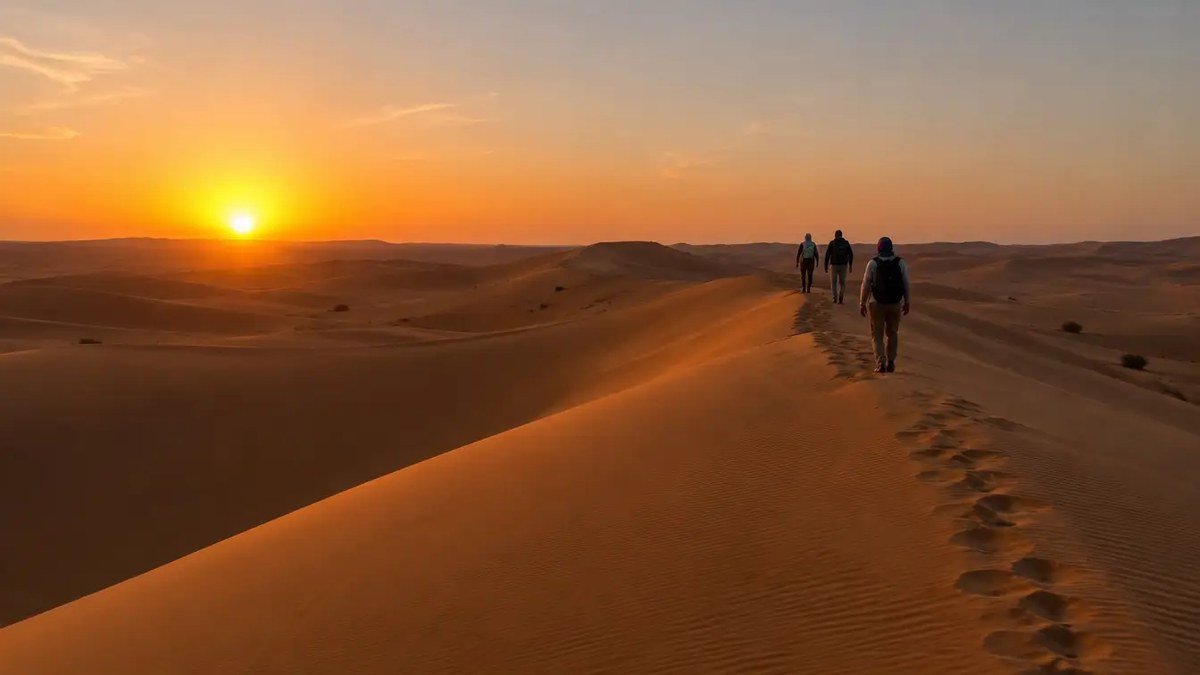
Many guides describe spring and autumn as the comfortable seasons, with summer very hot and winter nights cold. Check a recent forecast, because sandstorms and wind can change a plan. On a windy day the camp may still run, but the ride is less pleasant and the sky may be hazy.
- Booking the cheapest option without asking what is included.
- Packing only summer clothes and being cold at night.
- Expecting a long adventure when the ride is one to two hours.
- Leaving no time in the schedule: the desert is far from most cities, and tired travellers enjoy it less. See Morocco travel tips for general planning.
Treat the camel as a working animal. Do not pull the rope, stay seated until the guide tells you to get off, and tip the guide who walks the whole way, since he does the hardest part of the trip.
Frequently asked questions
How long is a camel ride in the Sahara in Morocco?
Listings for Merzouga mention roughly one to two hours each way to the camp, depending on the camp and the route. Ask the operator for the exact time.
How much does a Sahara camel trek cost?
Booking-site listings for an overnight trip showed about 47 to 140 USD per adult, roughly 430 to 1,300 MAD. Check current price, as it depends on the camp and extras.
Is a camel ride painful?
Not for most people on a short ride, but the saddle can be uncomfortable and your thighs may ache the next day. Wear loose trousers and hold the saddle handles.
What should I wear on a camel?
Loose trousers, closed shoes, a scarf, sunglasses and a warm layer for the evening. Avoid skirts and dresses.
Is it safe?
Camel rides on the main dune routes are routine and led by a guide on foot. Choose an operator with clear reviews, listen to the guide and skip the ride in strong wind.
Can I do it in one day without staying overnight?
Yes, some operators sell a shorter sunset ride. You skip the night sky and the sunrise, which many people rate as the highlight.
Where should I do it, Merzouga or Chigaga?
Merzouga and Erg Chebbi are easier to reach and have more camps. Erg Chigaga is more remote. The Merzouga vs Chigaga guide on this site compares them.
The information in this guide comes from trusted travel sources. Prices and times can change, so confirm them before you pay or travel.